Suggested Topics within your search.
Suggested Topics within your search.
Piet Mondrian
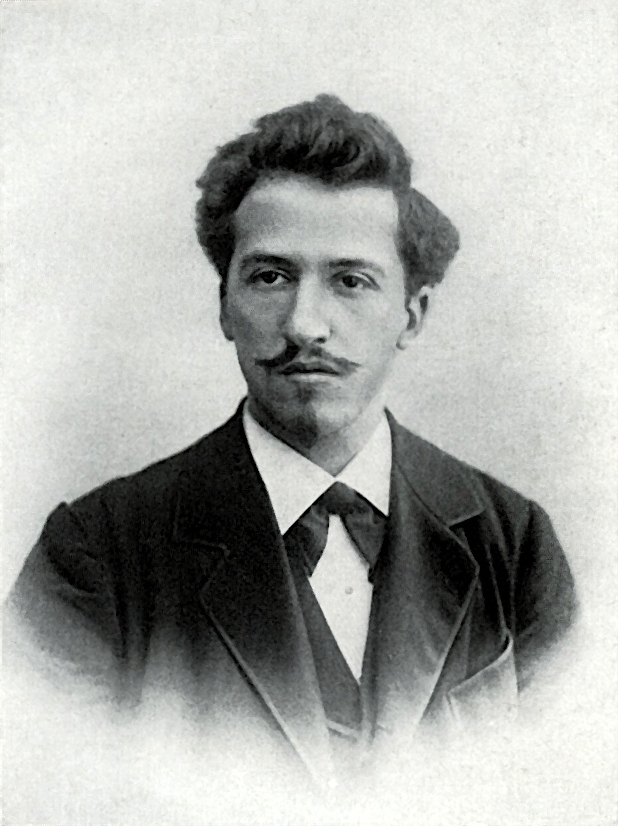 Pieter Cornelis Mondriaan (; 7 March 1872 – 1 February 1944), known after 1911 as Piet Mondrian (, ; ), was a Dutch painter and art theoretician who is regarded as one of the greatest artists of the 20th century. He was one of the pioneers of 20th-century abstract art, as he changed his artistic direction from figurative painting to an increasingly abstract style, until he reached a point where his artistic vocabulary was reduced to simple geometric elements.
Mondrian's art was highly utopian and was concerned with a search for universal values and aesthetics. He proclaimed in 1914: "Art is higher than reality and has no direct relation to reality. To approach the spiritual in art, one will make as little use as possible of reality, because reality is opposed to the spiritual. We find ourselves in the presence of an abstract art. Art should be above reality, otherwise it would have no value for man."
He was a contributor to the ''De Stijl'' art movement and group, which he co-founded with Theo van Doesburg. He evolved a non-representational form which he termed ''Neoplasticism''. This was the new 'pure plastic art' which he believed was necessary in order to create 'universal beauty'. To express this, Mondrian eventually decided to limit his formal vocabulary to the three primary colors (red, blue, and yellow), the three primary values (black, white, and gray), and the two primary directions (horizontal and vertical). Mondrian's arrival in Paris from the Netherlands in 1912 marked the beginning of a period of profound change. He encountered experiments in Cubism and with the intent of integrating himself within the Parisian avant-garde removed an 'a' from the Dutch spelling of his name (Mondriaan). Provided by Wikipedia
-
1